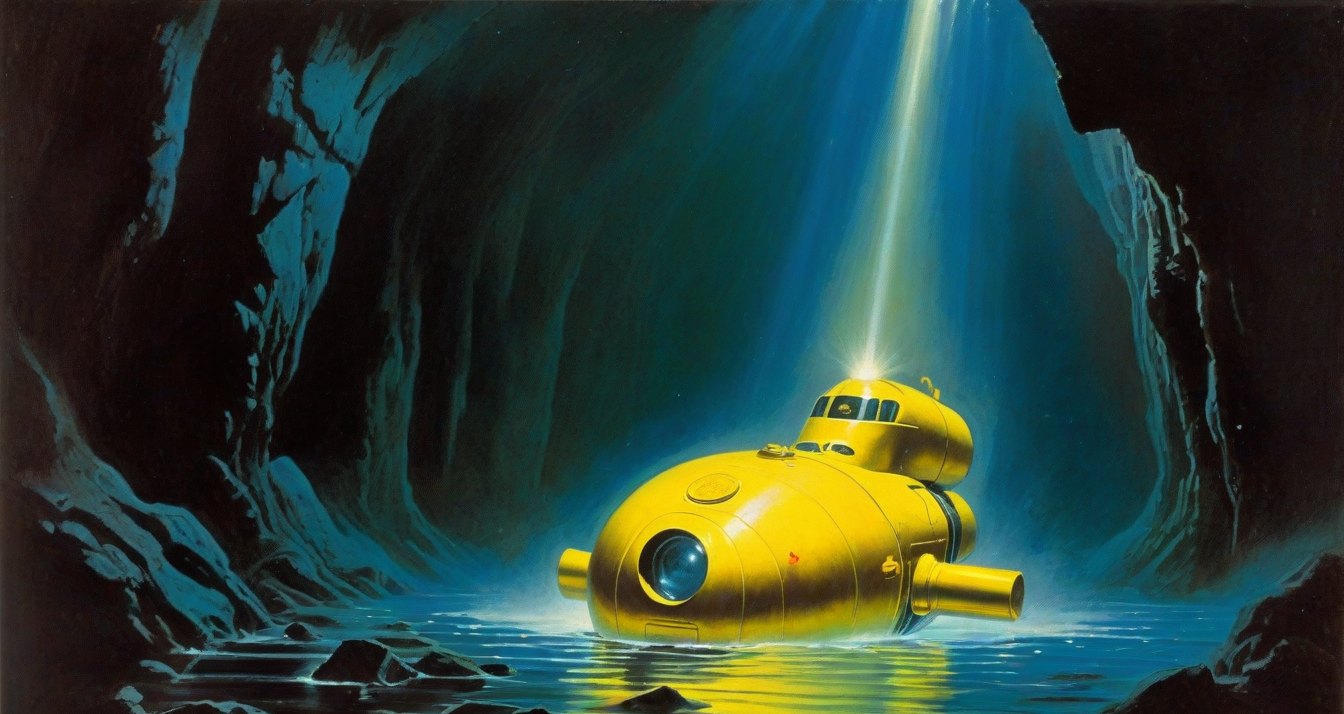
A survey ship took one sounding over the deepest trench on the chart. The ping went down, the sea floor sent it back, and then, a heartbeat late, something underneath the sea floor sent it back again.
Somebody has to go and see. Down through the black water, down a shaft no one on the surface dug, down through rock that has never seen a lamp, to the hollow middle of the world. Then round it, and out the other side.
The Deep Six is that journey, told in six games for the Atari 2600. Each is a plain 4K cartridge: 4,096 bytes of program and the console's 128 bytes of memory, with nothing added. The screen gives you blocks and two notes of sound. The rest happens where it did in 1981, in your head.
Six games, one story
The numbers are the order of the story. Play them in order for the whole trip, or start anywhere: each game stands on its own. Piton, the fourth, is the first one out.
-
01 · Coming soon
Soundings
The sea · downThe sea goes black at a thousand fathoms. Below that the chart is empty. You take the submarine down blind, steering by the ping and what comes back. At six thousand fathoms the trench walls end at a floor, and in the floor there is a hatch.
-
02 · Coming soon
Downclimb
The shaft · down, and back upUnder the hatch, the shaft is dry. Somebody cut ledges into it. Somebody hung a rope, and the rope is not old. A ping rises from the bottom and you climb down toward it, into a dig that strangers abandoned, to the thing they left behind.
-
03 · Coming soon
Undercut
The rock · downThe real echo is under their floor. So you dig your own way, through dirt that keeps the shape of every tunnel you cut, with the weight of the world stacked over your head. A long way down, the floor gives way.
-
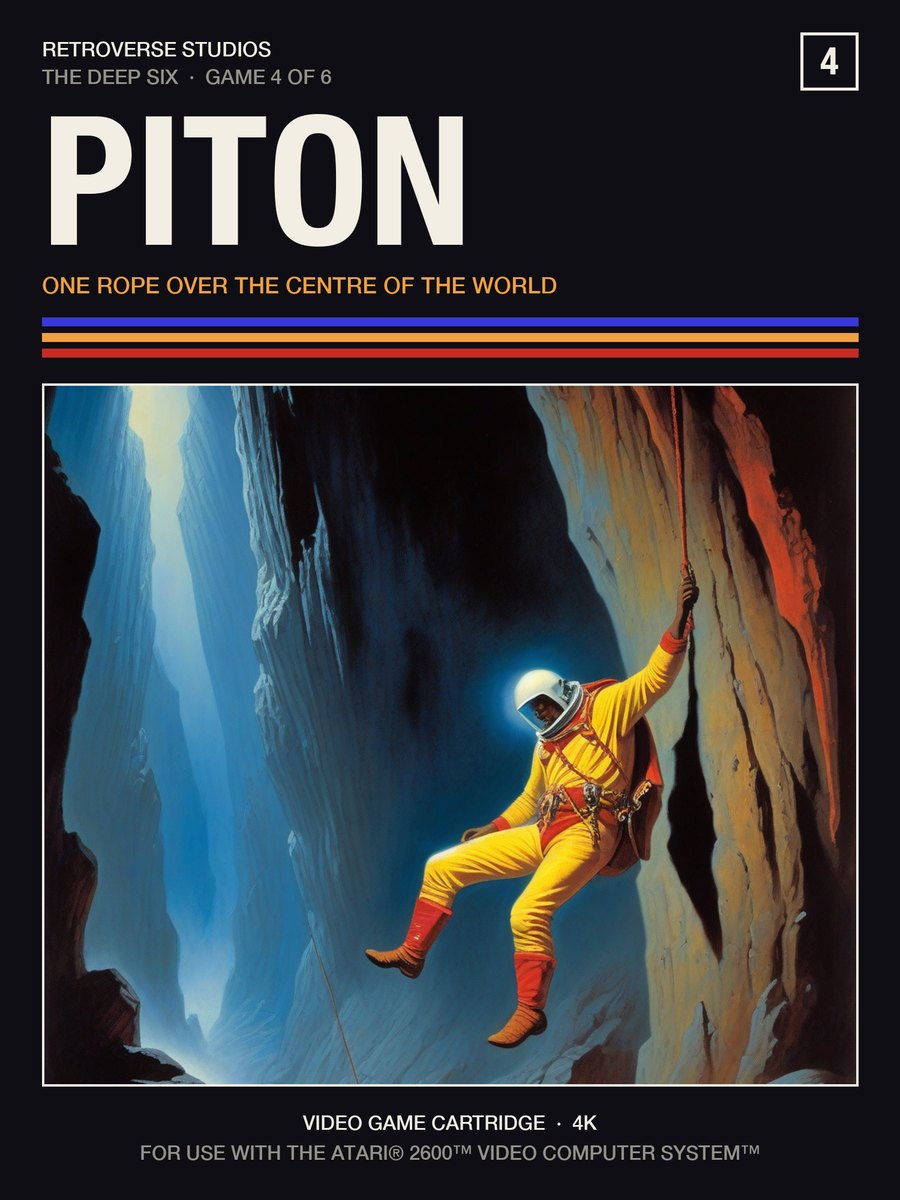 04 · Out now
Piton
The Hollow, at the centre · roundYou are hanging from the roof of the Hollow. A ring of 255 chambers wraps the centre of the world, and under them the pit glows like a furnace door. There is no ground to jump from. You have one rope, and the echo is calling from further round.
-
05 · Coming soon
Rail Ghost
A mine dug from the far side · outSomeone dug down from the other side. They broke into the Hollow and stopped. Their lanterns still burn and their haulage cable still turns. Hook a cart to it and it drags you outward through the dark, and a second cart rolls beside yours.
-
06 · Coming soon
Cloudbase
The far-side sky · upThe mine opens in daylight. It is a sky you have never stood under. A canopy lies folded at the mine mouth, as if someone meant to come back for it. The air is rising. Above the cloud, something is taking a sounding.
The trip
The sea, a shaft, and new rock take you down to the Hollow, a ring of chambers around the centre of the world. Down means toward the centre, so from inside the ring there is nowhere deeper to go. You go round.
You leave the Hollow through its roof, part of the way round. From there the way out is up: a mine somebody dug from the other side, then the sky.
One small figure makes the whole trip, and one sound runs through every game: the two-note ping you hear in the first.
How it was made
The series idea and the game concepts are Michael Borck's. The specs, the code, the test tools and the paintings are developed with the help of generative AI models, working under his direction. He reviews, edits and approves all of it, and decides what goes into the games.
Every game is checked by programs on each build. They prove that every level can be finished, run the cartridge beside a model of its physics frame by frame, and check the timing of every line the television draws. The design documents and a record of every decision are open, with the source.